
Construction Manager at Risk: When the Price Is Set

Leaving the price clause unread when you hire a construction manager at risk costs the project if the ceiling, the fee, and the trade awards point at different parties. The role advises during design and then builds under an agreed construction price.
A construction manager at risk is a delivery role, not a payment clause by itself. In the Construction Management Association of America’s August 2012 owner’s guide, the firm consults during development and design, then acts as the legal equivalent of a general contractor during construction, with a commitment to a defined schedule and either a fixed price or a guaranteed maximum price. On an AIA Document A133–2019 project, that price is proposed at a time the owner and the construction manager agree, and it binds when the owner accepts it by signing the guaranteed maximum price amendment. Connecticut’s statute for certain state buildings sets a different clock. This page separates those public texts. It does not replace the contract on your project or a lawyer’s reading of it.
This note sits in the Procurement collection.
Scroll horizontally to see all columns.
| Question | Public text that answers it | What that text does not fill in |
|---|---|---|
| What the role is | CMAA, August 2012: advisor in design, constructor once the price is agreed | The services list in your agreement |
| When the price is proposed | AIA A133–2019 § 3.2.1: a time the owner and construction manager agree | The date on your project |
| What the ceiling is | AIA Exhibit A sample: an amount the contract sum is not to exceed, subject to change orders | The dollar amount |
| Who awards trades | A133 summary, or Connecticut § 4b-103 if that statute is the one that applies | A private job in another state |
What does construction manager at risk mean?
It means one firm does two jobs in sequence. During planning and design it advises the owner. After a construction price is agreed, it builds the work and carries the cost risk of that price. CMAA’s owner’s guide (copyright 2012; the file header reads August 2012) calls this construction management at risk, also CM at risk and CM/GC. Its short definition is a commitment by the construction manager at risk to deliver the project within a defined schedule and a price, either fixed or a guaranteed maximum price. During development and design the firm acts as a consultant. During construction it acts as the legal equivalent of a general contractor.
That is a different object from agency construction management in the same guide. Agency construction management is a management process: the owner uses a construction manager as its principal agent, and the guide says the process can be used regardless of the delivery method. The at-risk arrangement is the delivery method in which the firm later holds construction performance.
The label is also not the payment method. The same guide lists lump sum, guaranteed maximum price, and reimbursable as compensation methods that are not tied to one delivery method. A guaranteed maximum price can appear in more than one kind of contract. Calling a job “CMAR” does not, by itself, tell you the ceiling, the fee, or who pays above the ceiling.
Takeaway: Write down whether the firm only advises, or also builds under an agreed price, before you use the name.
How is a construction manager at risk different from a general contractor?
During construction, CMAA’s 2012 guide says the construction manager at risk acts as a general contractor: it holds the risk of construction performance and of subletting the work to trade contractors. The difference is what happens before that, and the moment the role changes.
In the same guide, design-bid-build runs design, then a bid, then construction. The contractor is procured for the build phase, which usually leads to a sealed-bid fixed price. A construction manager at risk is already at the table during planning and design, giving schedule, budget, and constructibility advice, and the construction price is negotiated later. CMAA says that price is usually set when the design is somewhere between 50 percent and 90 percent developed. That range is the guide’s “usually,” dated August 2012. It is not a rule for the set of drawings on your desk.
Once the price is fixed, CMAA says the firm converts from a professional advisor to the contractual role of a general contractor. From that point the same advisory assistance is not present during construction, because the firm is in an at-risk position. Disputes can then turn on what the unfinished design was assumed to include when the price was negotiated.
A general contractor hired only to build, after design is issued for bids, has not taken that earlier advisory seat. A construction manager who never takes the construction contract has not taken the at-risk seat. The construction procurement methods comparison separates design-bid-build, design-build, and the highway CM/GC description. This page stays with the at-risk building role and its price.
Common mistake: Treating “general contractor” and “construction manager at risk” as two prices for the same hire. During construction the at-risk firm is in the constructor’s seat. The extra work is the advice before the price, and the conversion when the price is fixed.
Takeaway: Ask which seat the firm is in this month: advisor, constructor, or both under a written split.
What does the firm do before construction starts?
It prices, schedules, and comments on the design while the architect is still drawing, under whatever preconstruction list the agreement actually contains.
CMAA’s August 2012 guide describes that advice as schedule, budget, and constructibility comments during planning and design. It also describes a common contracting path: start with a fixed fee for preconstruction and general conditions, plus an agreed markup as a percentage of construction cost, then convert the contract to a guaranteed maximum price once the design has reached a point where that price can be set, rolling the remaining fixed costs into the ceiling. “Common” is CMAA’s word. A project can be written another way.
AIA’s own summary of A133–2019 divides the construction manager’s services into a preconstruction phase and a construction phase, and says portions of the two can proceed at the same time in order to fast-track the work. The same summary, describing the 2019 changes, says the form requires the construction manager to exercise reasonable care in preconstruction services; to update constructability and schedule recommendations as the architect advances the design; to recommend equipment, materials, services, and temporary project facilities; to give the owner a staffing plan for preconstruction; and to prepare a subcontracting plan for owner requirements such as a funding source or a statute. A fill point is left for other preconstruction services. Those are AIA’s description of its form. They are not a menu you can assume was copied into a different contract.

Takeaway: Match each preconstruction task to a line in the agreement you signed. A task that is only in CMAA’s guide or AIA’s summary is not yet your scope.
When is the guaranteed maximum price set, and what is in it?
On an A133–2019 project, the price is proposed at a time the parties agree, and it is the sum of three figures the form names. It becomes the contract ceiling when the owner accepts that proposal by signing the amendment. The dollar amount, the drawings it rests on, and who keeps an underrun are blanks until that amendment is filled in.
AIA counsel Mike Koger’s article of 3 February 2022, “7 Construction Contract Mistakes to Avoid”, quotes A133–2019 § 3.2.1. At a time the owner and the construction manager agree, the construction manager prepares a guaranteed maximum price proposal for the owner’s and the architect’s review, and for the owner’s acceptance. The price in that proposal is the sum of the construction manager’s estimate of the cost of the work, the construction manager’s contingency described in § 3.2.4, and the construction manager’s fee described in § 6.1.2.
The public Exhibit A sample (A133–2019) is the amendment that establishes the price. It says the guaranteed maximum price is an amount the contract sum is not to exceed. The contract sum is the construction manager’s fee plus the cost of the work, and the sample points to the agreement for the definition of that cost. The construction manager guarantees the contract sum will not exceed the stated amount, subject to additions and deductions by change order. The sample’s itemized statement is organized by trade categories and includes allowances, the construction manager’s contingency, alternates, the fee, and other items that make up the price. The amendment also has lines for the drawings, specifications, allowances, and the assumptions and clarifications the price is based on.
Two limits follow from those pages, and both are easy to skip.
The ceiling can move. The sample ties the guarantee to change orders. A change order is not a breach of the ceiling; it is the path the form uses to add or deduct. AIA’s summary of the 2019 schedule of values adds a second limit: line items are not separate ceilings. The only guaranteed figure is the guaranteed maximum price, and a line can be exceeded if the overall price is not.
An underrun is not assigned. CMAA’s August 2012 guide, writing about guaranteed maximum price contracts in general, says the price typically includes a base cost plus allowances and contingencies, and that any amount under the ceiling can fall to the owner or be shared. The A133 Exhibit A sample does not make that choice. It leaves the savings language for the parties to insert. Read the amendment you have. Do not import CMAA’s “can be shared” into an A133 form that left the line blank.
The contingency inside this price is the construction manager’s contingency named in § 3.2.4, a component of the proposal sum. It is not the same object as an owner’s contingency held outside the contract. How to tell a contingency line from an allowance, escalation, or a management reserve is covered in contingency in construction. That guide does not set the A133 contingency amount.
Connecticut uses a different clock when General Statutes § 4b-103 applies. The 2025 text published by Justia lets the Commissioner of Administrative Services use a construction manager at-risk contract for construction, renovation, or alteration of buildings or facilities under that title. Except for the early-work and phased-renovation rules below, the contract has to provide a maximum guaranteed price determined no later than the commissioner’s receipt and approval of the trade-contractor bids, and construction is not to begin before that price except for site preparation and demolition already bid and awarded. That timing is the statute’s. It is not § 3.2.1.
Takeaway: Add the estimate, the named contingency, and the fee only if the form in front of you is A133–2019. Then read the amendment for the drawings, the assumptions, the change-order path, and any savings line.
Who awards the trades and buys the materials?
The at-risk firm holds the trade contracts in the CMAA description. Who is allowed to choose the bidder depends on which document governs, and the Connecticut statute does not match the A133 summary.
CMAA’s August 2012 guide says the construction manager at risk holds the risk of subletting the construction work to trade contractors, and that the firm can bid and subcontract portions of the work once that portion’s design is approved, including while unrelated portions are still in design. In that partial-design case the firm and the owner often negotiate a guaranteed maximum price that includes the firm’s estimate of the cost of the remaining design.
AIA’s summary of A133–2019, in the note on Article 9, says the construction manager decides which subcontractor bids to accept. The owner, consulting the architect, can reject subcontractors the construction manager proposes. The summary states that the owner is not the party who selects the accepted bids.
Connecticut § 4b-103, where it applies, is stricter and points the other way. The construction manager at risk invites bids for project elements and posts them on the State Contracting Portal. Bids stay sealed until a public opening. After consultation with and approval by the commissioner, the firm awards each element to the responsible qualified contractor with the lowest bid that meets the bid requirements. The construction manager at risk is not eligible to submit a bid for any such element. That lowest-bid rule is the statute’s rule for those state contracts. It is not the A133 summary, and it is not a private project in another state.
Early construction before that Connecticut price is narrower than a general permission to start early. Subsection (b) allows site preparation and demolition to start before the price if those elements were already bid and awarded. Subsection (c) adds public-utility installation and connections and the building envelope (roof, doors, windows, and exterior walls), and only when the project is a renovation of an existing building, the element was already bid and awarded, and the total cost of the early work does not exceed 25 percent of the estimated construction cost of the whole project. Subsection (d) covers an occupied building renovated in phases: the commissioner can set the maximum guaranteed price for each phase before that phase begins, if the rest of subsection (b) is met. Those lists and that percentage are the statute’s. They do not transfer to an A133 project.
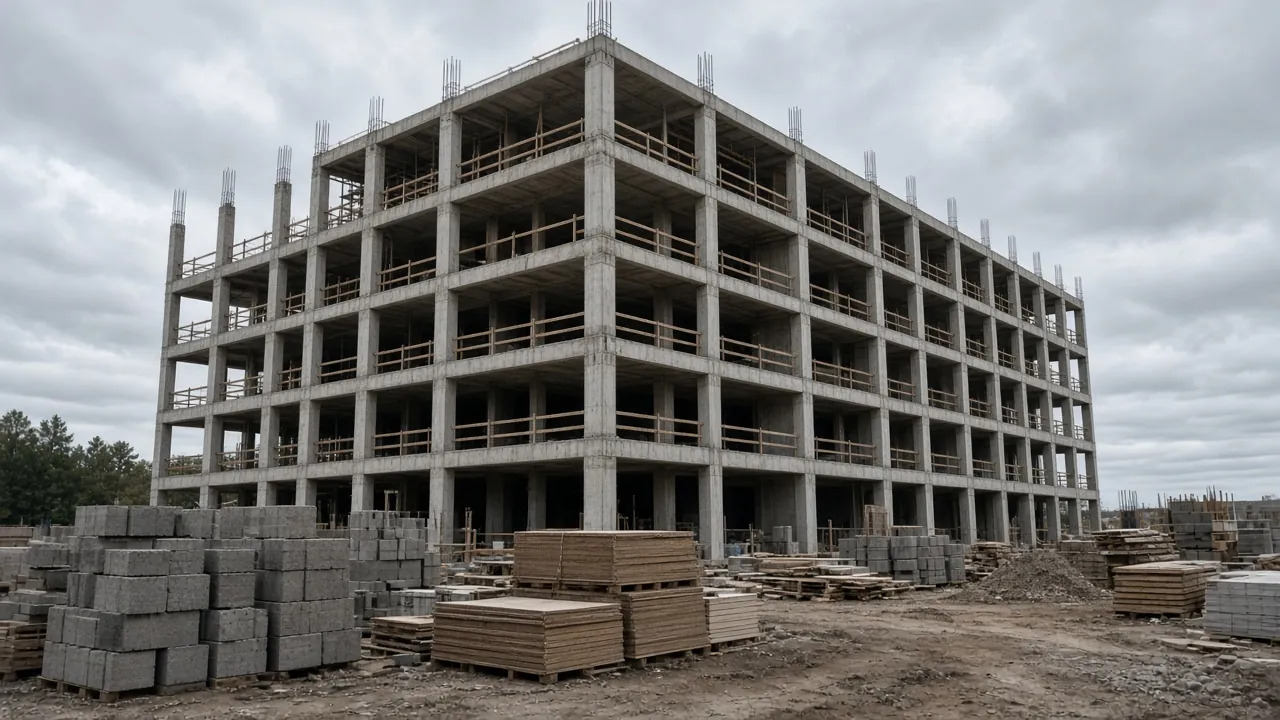
Takeaway: Name the document that picks the trade contractor. If it is A133, the construction manager accepts the bid and the owner can reject a proposed firm. If it is Connecticut § 4b-103, the award is to the lowest responsible qualified bidder, and the construction manager at risk does not bid the element.
When does this description fit, and when does it not?
Use it when you need the constructor’s comments while the design is still moving, and you are willing to bind a construction price before every drawing is finished. Do not use the CMAA description to predict a statute, a fee, or a highway contract.
CMAA’s August 2012 guide lists two advantages: the owner can take a contractor’s view into planning and design, and early parts of the work can start before design is complete. It lists two disadvantages: the owner’s result depends on selecting the right firm, and the advisory help the firm gave during design is not the same help once the firm is at risk during construction. The guide also says this delivery method is seldom used on horizontal infrastructure. Those sentences are CMAA’s, from 2012, and the guide presents them as characteristics, not as a ranking.
The description does not fit in three situations this page can actually mark:
- The firm is an advisor only, with no construction price and no construction performance. That is the agency role in the same guide, not construction management at risk.
- The contract is a Connecticut state-building contract under § 4b-103. Use that section’s bidding rule and its price timing, including the 25 percent early-work cap on the renovations it names.
- The question is which delivery route to pick among design-bid-build, design-build, management contracting, and highway CM/GC. That comparison is the procurement-methods page. This page does not repeat it, and it does not say which route a project should sign.
AIA’s February 2022 article makes the practical warning that sits under the fast-track advantage: the earlier the price is set, the less of the design the price can reflect, and conflict grows if the design later costs more than the agreed sum. The article’s advice is to balance an early start against waiting until the design is far enough along to price. It does not name a percentage at which that balance is reached.
Takeaway: If the unsigned agreement has no construction price and no trade-contract role, you are not looking at the at-risk arrangement these sources describe.
What do you check before you treat the ceiling as fixed?
Copy the blanks below from the amendment and the statute that actually apply. A blank stays blank. This page has no project file to fill it, and it is not a legal review.
Scroll horizontally to see all columns.
| Check | What the opened text says | Still unknown until your papers say it |
|---|---|---|
| When the proposal is due | A133–2019 § 3.2.1: a time the owner and construction manager agree | The date |
| What the proposal adds | Estimate of the cost of the work, plus the § 3.2.4 contingency, plus the § 6.1.2 fee | The three amounts |
| When it binds | The owner accepts by signing Exhibit A. The AIA summary also says the owner can reject the proposal or negotiate it | Whether yours is signed |
| What the ceiling is | Exhibit A sample: an amount the contract sum is not to exceed, subject to change orders. The contract sum is the fee plus the cost of the work | The number, and which change orders move it |
| What the price assumes | Exhibit A has lines for drawings, specifications, allowances, and assumptions and clarifications | The list attached to the amendment |
| Who keeps an underrun | CMAA 2012: the owner, or a share. The A133 sample leaves a savings fill point and does not choose | The sentence in your amendment |
| Who awards a trade | A133 summary: the construction manager accepts the bid; the owner, with the architect, can reject a proposed firm. Connecticut § 4b-103: lowest responsible qualified bidder, and the at-risk firm does not bid | Which document you are under |
| Work before the price | A133 summary: the construction phase starts when the owner signs the amendment, or earlier by a written agreement of the parties. Connecticut: generally after the price, with the early-work exceptions above | The agreement or the statute section that applies |
Takeaway: Treat the ceiling as fixed only after the amendment is signed, the assumptions are attached, and you know which change orders are allowed to move it.
Sources and review date
Read on 13 October 2026:
- Construction Management Association of America, An Owner’s Guide to Project Delivery Methods, copyright 2012, file header August 2012. Definitions of construction management at risk, the 50 to 90 percent design range, preconstruction advice, the fixed-fee-then-ceiling path, trade subcontracting, and the guaranteed maximum price compensation note.
- AIA Contract Documents, summary of A133–2019. Preconstruction and construction phases, the guaranteed maximum price amendment, Article 9 bid acceptance, and the schedule-of-values note that line items are not separate ceilings.
- AIA Document A133–2019 Exhibit A sample. The sample’s statement of what the guaranteed maximum price is, what the contract sum consists of, the change-order qualification, and the itemized contents.
- Mike Koger, AIA Contract Documents, “7 Construction Contract Mistakes to Avoid”, 3 February 2022, for the text of A133–2019 § 3.2.1 and the warning on pricing before the design is far enough along.
- Connecticut General Statutes § 4b-103 (2025), as published by Justia. History note through P.A. 14-188, effective 1 July 2014 for the early-work and phased-price amendments.
The full A133 agreement was not purchased. The sample points at the agreement for the definition of the cost of the work, and that definition is not copied here. New York and North Dakota pages that appeared in an October 2026 search snapshot were not used, because they did not return readable text for this draft. No fee, no project record, and no savings split is supplied beyond the sentences above. The page is an explanation of those public texts. It is not the contract, and it is not legal advice.
Related articles

AIA Contract Documents: A Procurement Form Guide
Match A101, A102, A104, A133, A141, A201, and A401 to the price clause and the delivery route before the wrong general conditions are incorporated.
Read article: AIA Contract Documents: A Procurement Form GuideHow to Choose Construction Material Procurement Software: A Demo Worksheet
Evaluate construction material procurement software with a blank five-test vendor demo worksheet covering submittal revisions, PO release, split deliveries, damaged receipts and CSV export.
Read article: How to Choose Construction Material Procurement Software: A Demo Worksheet
Construction Procurement Methods Compared: How to Choose the Right Route
How design-bid-build, design-build, management contracting and CM/GC split design, price and overlap, and why five-method lists disagree.
Read article: Construction Procurement Methods Compared: How to Choose the Right Route